
SMB AI Task Automation Fit Scorecard
October 2026 · A practical decision tool for small businesses evaluating AI and automation.
How to use this scorecard: Choose one real business task. Score each factor from 0 to 2, where 0 means weak fit, 1 means mixed fit, and 2 means strong fit. Add the 10 scores for a total out of 20.
Printable version: Use your browser’s Print command and choose “Save as PDF” if you want a clean local copy.
The 10-point scorecard
| # | Factor | Question | Score 0-2 |
|---|---|---|---|
| 1 | Repetition | Does the same work happen frequently? | |
| 2 | Clear inputs | Are the inputs predictable and easy to define? | |
| 3 | Clear outputs | Can a correct result be checked against clear rules? | |
| 4 | Error impact | Are mistakes low impact and easy to correct? | |
| 5 | Reversibility | Can the action be undone or retried safely? | |
| 6 | Data sensitivity | Is the data appropriate for the chosen system? | |
| 7 | Human judgement | Is the task mostly rule-based rather than judgement-heavy? | |
| 8 | Time cost | Does the task consume enough time to justify automation? | |
| 9 | System readiness | Are reliable integrations, exports, forms, calendars, or APIs available? | |
| 10 | Auditability | Can inputs, outputs, approvals, actions, and exceptions be recorded? |
Interpret your score
16-20: Strong automation candidate. Start with a controlled pilot.
11-15: AI-assisted candidate. Use AI to assist first, with human approval.
6-10: Narrow automation only. Keep the main decision human and automate supporting steps.
0-5: Poor automation candidate. Keep the task primarily human-led.
Choose the right pattern
- Prompt: drafting, summarising, comparing, analysing, or preparing work.
- Workflow automation: repeatable steps across systems, reports, reminders, routing, or data movement.
- Conversational assistant: routine questions, appointment booking, lead capture, routing, or after-hours coverage.
- Human-led with AI assistance: sensitive decisions, approvals, negotiations, commitments, or complex exceptions.
Minimum controls before production
- Define what the system may and may not do.
- Limit access to what is needed.
- Require human approval for high-impact actions.
- Record actions and exceptions.
- Protect sensitive data and define retention.
- Test failure cases and rollback.
- Monitor quality, cost, and business value.
- Review the workflow whenever tools, data, or business rules change.
Quick pilot worksheet
| Task | |
| Current owner | |
| Frequency | |
| Time spent per week | |
| Systems involved | |
| Sensitive data involved | |
| Main failure risk | |
| Required human approval | |
| Target outcome | |
| Score out of 20 | |
| Recommended pattern | |
| Pilot scope | |
| Success metric | |
| Review date |
Next step: Pilot the smallest useful version, measure the result, and expand only after controls and value are proven.
This is practical business guidance, not a vendor certification or a substitute for legal, privacy, security, or regulatory advice.
Keep reading Related articles
More practical guides

A practical WordPress security hardening checklist
Review account access, updates, configuration and recovery before changing your WordPress site.
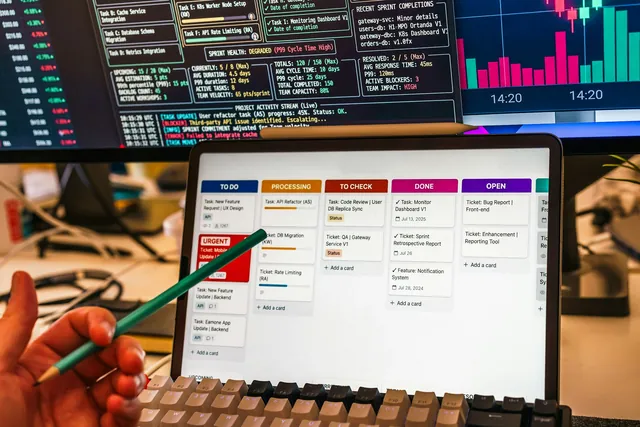
What to decide before you build an MVP
A practical way to turn a product idea into a focused first release, with clear scope and useful feedback.
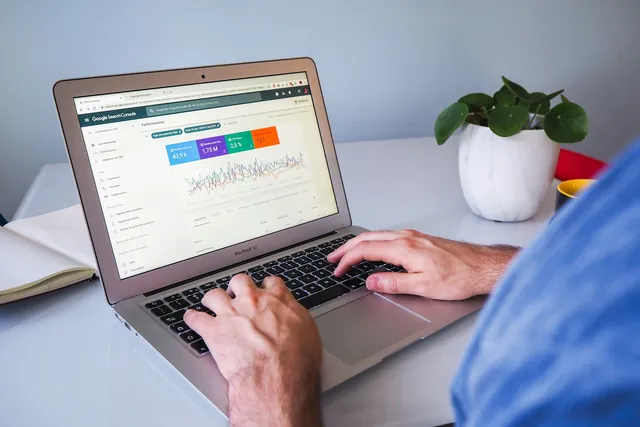
Website redesigns that keep your search visibility
Plan content, page addresses and launch checks before replacing a website people already rely on.
Your next step
Not sure which service fits?
Describe the problem and we will recommend a starting point.